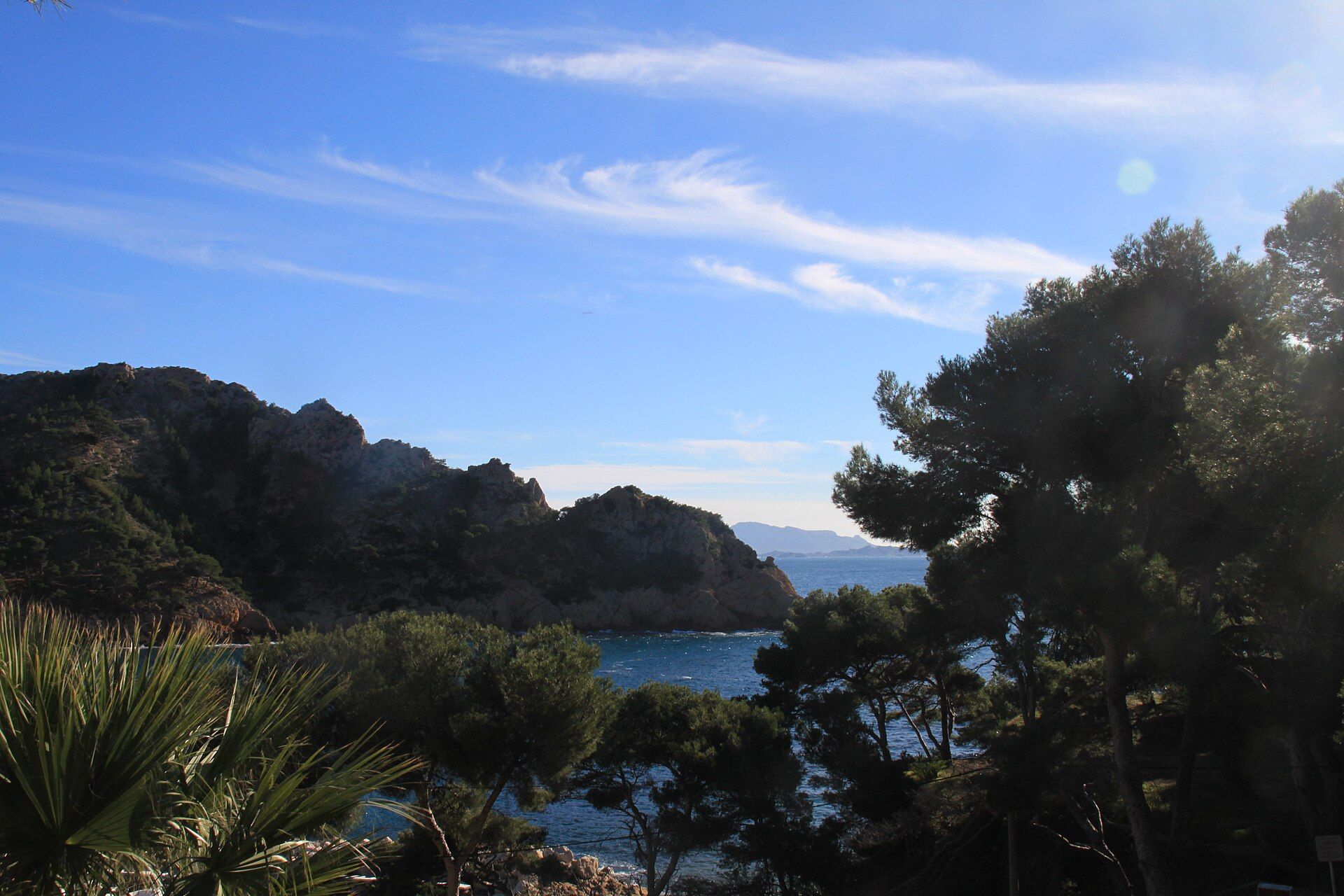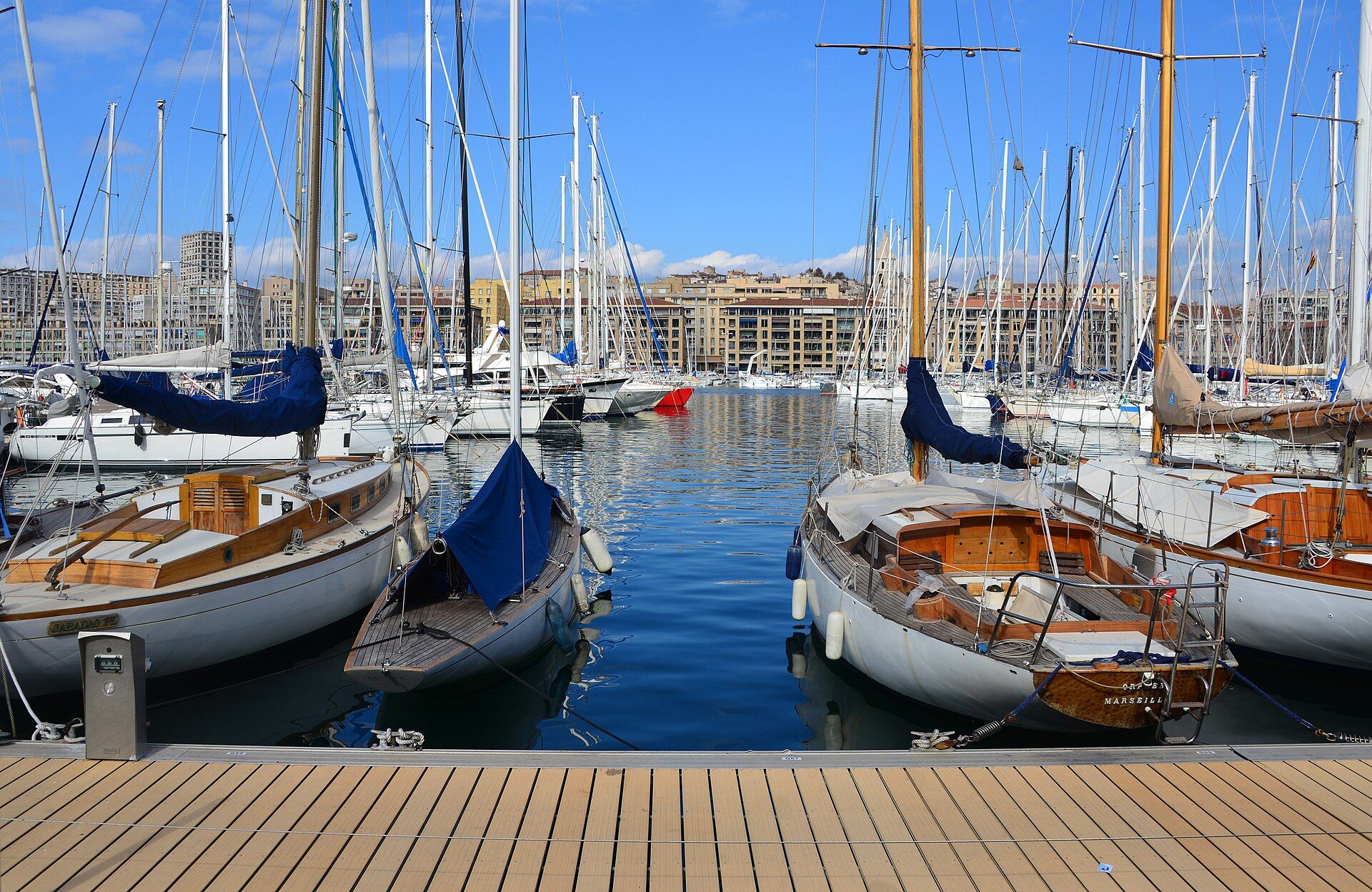
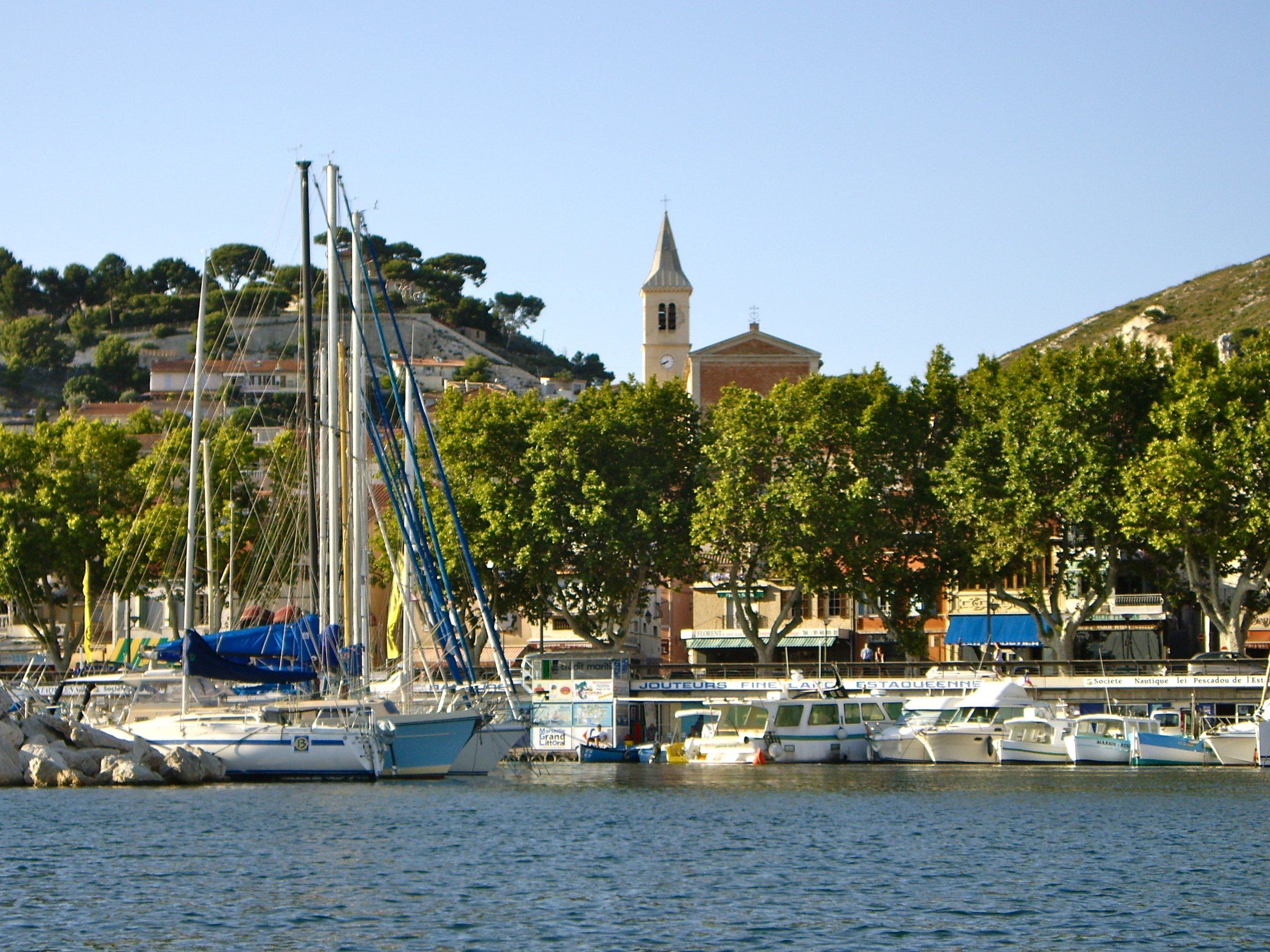
L’Estaque is an old fishing village on the north-western edge of Marseille, in the 16th arrondissement, about 10 km from the Vieux-Port. Cézanne painted its bay some twenty times, and Braque painted the houses that gave Cubism its name. People come today for the Painters’ Trail, for chichis fried on the harbour, and because village life here outlasted the city growing around it.
Where does the name L’Estaque come from?
From the Provençal estaca, the stake or mooring ring where fishermen tied up their boats. The village is medieval: the first written record, in the cathedral archives, is dated 30 November 1294.
For centuries, everything here turned on fishing: sardine, tuna, lobster. In 1878 there were about 75 skippers and 250 boats, and by the early 1900s more than 400 fishermen.
The 19th century brought tile works, whose clay was shipped as far as Mexico, then chemical plants (sulphur, soda, Pechiney). Workers came from Piedmont and Spain. The workers’ courtyards (courées) date from that time, and so do the “folies”, the summer houses. The population went from 328 in 1818 to 13,536 in 1931.
The railway station opened in 1848; it has been a listed historic monument since 2012.
Under the Nerthe hills behind the village runs the Rove Tunnel. It was built between 1911 and 1927: 7,120 metres long, 22 wide, 15 high. It was the largest underground canal in the world, running from Marseille’s port to the Étang de Berre. President Doumergue opened it on 25 April 1927. On 16 June 1963 a collapse closed it for good.
After the war the factories shut. The harbour stayed, along with the memory of the painters and a village spirit that still holds.
Cézanne in L’Estaque: “like a playing card”
Cézanne probably first came in 1865 and certainly in 1869, then stayed for long periods between 1876 and 1885. His mother had a house near the church. After 1886 he never came back.
On 2 July 1876 he wrote to Pissarro:
“It’s like a playing card. Red roofs on the blue sea.”
And a little further on: “The sun is so terrific that objects seem to stand out in silhouette, not only in black or white, but in blue, red, brown, violet.”
Red roofs, blue sea, the bay behind: he went on to paint a whole series. The Metropolitan Museum in New York counts “some twenty views of L’Estaque”. In the Met’s own canvas, painted around 1885, you can pick out Notre-Dame de la Garde across the water.
The Musée d’Orsay has The Gulf of Marseilles Seen from L’Estaque (1878-1879). It was the first Cézanne to enter the French national collections, through the Caillebotte bequest of 1894.
Braque and the birth of Cubism
Georges Braque came in October 1906 and stayed until February 1907. He was back later in 1907, then again in 1908. Cézanne had died in 1906: the two men never met here.
In 1908 Braque painted Houses at L’Estaque, now in the Kunstmuseum Bern. The houses become plain volumes, with no sky and no detail. The 1908 Salon d’Automne turned it down. Matisse sat on the jury and, as the story goes, described a painting made of “little cubes”. That November the critic Louis Vauxcelles wrote that Braque was reducing everything “to cubes”; in 1909 he spoke of “bizarreries cubiques”. In the end it was the dealer Kahnweiler who showed the pictures in his gallery.
Houses at L’Estaque is often called the first Cubist landscape. One thing is certain: the movement owes its name to the landscapes of L’Estaque. Viaduct at L’Estaque (1907) is in the Minneapolis Institute of Art.
Renoir, Derain, Dufy and the rest
Renoir came in January 1882 and painted alongside Cézanne; his Rocky Crags at L’Estaque is at the MFA Boston. Derain painted The Turning Road, L’Estaque in 1906, a major Fauve work, now at the MFA Houston. Dufy painted Trees at L’Estaque in 1908.
Friesz (1907), Marquet (1916-1918), Monticelli and Guigou also worked here.
The Painters’ Trail: a two-hour walk
The Chemin des peintres is 8 enamelled-lava panels, each with a reproduction of a painting made on the spot. You start on the harbour jetty, and it takes about 2 hours on foot.
The route goes past the church square, through the Marinier and Riaux valleys, back to the port, on to the Corbière fort and Notre-Dame de la Galline. At every stop you can hold the painting up against the view. The roofs have changed since. The light, not so much.
Go early in the morning or late in the afternoon, when the sun is low. And wear proper shoes: the path climbs through the valleys.
Where can you see the L’Estaque paintings?
The canvases painted here have ended up all over the world:
- Musée d’Orsay, Paris: Cézanne, The Gulf of Marseilles Seen from L’Estaque.
- Musée de l’Orangerie, Paris: Cézanne, The Pine Tree at L’Estaque.
- Metropolitan Museum, New York: Cézanne, The Gulf of Marseilles Seen from L’Estaque, c. 1885.
- Art Institute of Chicago: Cézanne, The Bay of Marseille, Seen from L’Estaque.
- Kunstmuseum Bern: Braque, Houses at L’Estaque.
- MFA Boston (Renoir), MFA Houston (Derain), Minneapolis Institute of Art (Braque).
In Marseille itself, the Musée Cantini shows Dufy’s Trees at L’Estaque, on loan from the Centre Pompidou since 1987. The museum rehung its collection in May 2026. If you want to see an L’Estaque painting without leaving the city, this is the only place.
Chichis and panisses: what to eat on the port
Chichis frégis appeared in the 1930s: they were the Sunday seaside treat of the tile-works families. The dough mixes wheat and chickpea flour with orange blossom, and it is fried in sticks about 20 cm long. The “bada”, the extra scrap they slip into your bag, is a sign of friendship.
Panisses are chickpea fritters, usually eaten with an aperitif.
The kiosks are on the port: Chez Magali, frying chichis since 1947, Chez Freddy and Lou Goustado de l’Estaco.
On Saturday mornings there is a market by the beach. In summer the harbour hosts the water-jousting of La Fine Lance Estaquéenne.
L’Estaque on screen: Guédiguian’s films
Film-maker Robert Guédiguian, born in Marseille in 1953, grew up in L’Estaque and set his “Contes de l’Estaque” here:
- L’argent fait le bonheur (1993)
- Marius et Jeannette (1997), selected for Un Certain Regard at Cannes, winner of the Prix Louis-Delluc and of the César for Best Actress for Ariane Ascaride
- À l’attaque ! (2000)
La Villa (2017) was shot a little further along, in the Méjean calanque on the Côte Bleue. Watch Marius et Jeannette again before you come and you will recognise the lanes and courtyards as you walk through them.
Practical
- The shuttle boat runs from L’Estaque harbour to the Vieux-Port in 35 minutes, in season (2026: 25 April to 27 September, one boat an hour, tickets sold on board). Check times on rtm.fr.
- From the villa, L’Estaque harbour is a few minutes downhill.
- The Painters’ Trail starts on the harbour jetty: 8 panels, about 2 hours on foot.
- In Marseille, Dufy’s Trees at L’Estaque is at the Musée Cantini.
- You can come any time of year: the Nerthe hills shelter L’Estaque from the mistral.
FAQ
Where can I see a painting of L’Estaque in Marseille? At the Musée Cantini, which shows Raoul Dufy’s Trees at L’Estaque (1908), on loan from the Centre Pompidou since 1987. The Cézannes are in Orsay, the Orangerie, the Met and Chicago.
How long is the Painters’ Trail? About 2 hours on foot. It starts on the harbour jetty and has 8 panels reproducing paintings made on the spot.
How do you get from L’Estaque to the Vieux-Port? In season, a shuttle boat links L’Estaque harbour to the Vieux-Port in 35 minutes, one boat an hour (2026: 25 April to 27 September).
What are chichis frégis? Fried dough sticks made with wheat and chickpea flour and orange blossom. They were born in L’Estaque in the 1930s and you still eat them on the port, at Chez Magali since 1947.
Stay at Villa Byblos
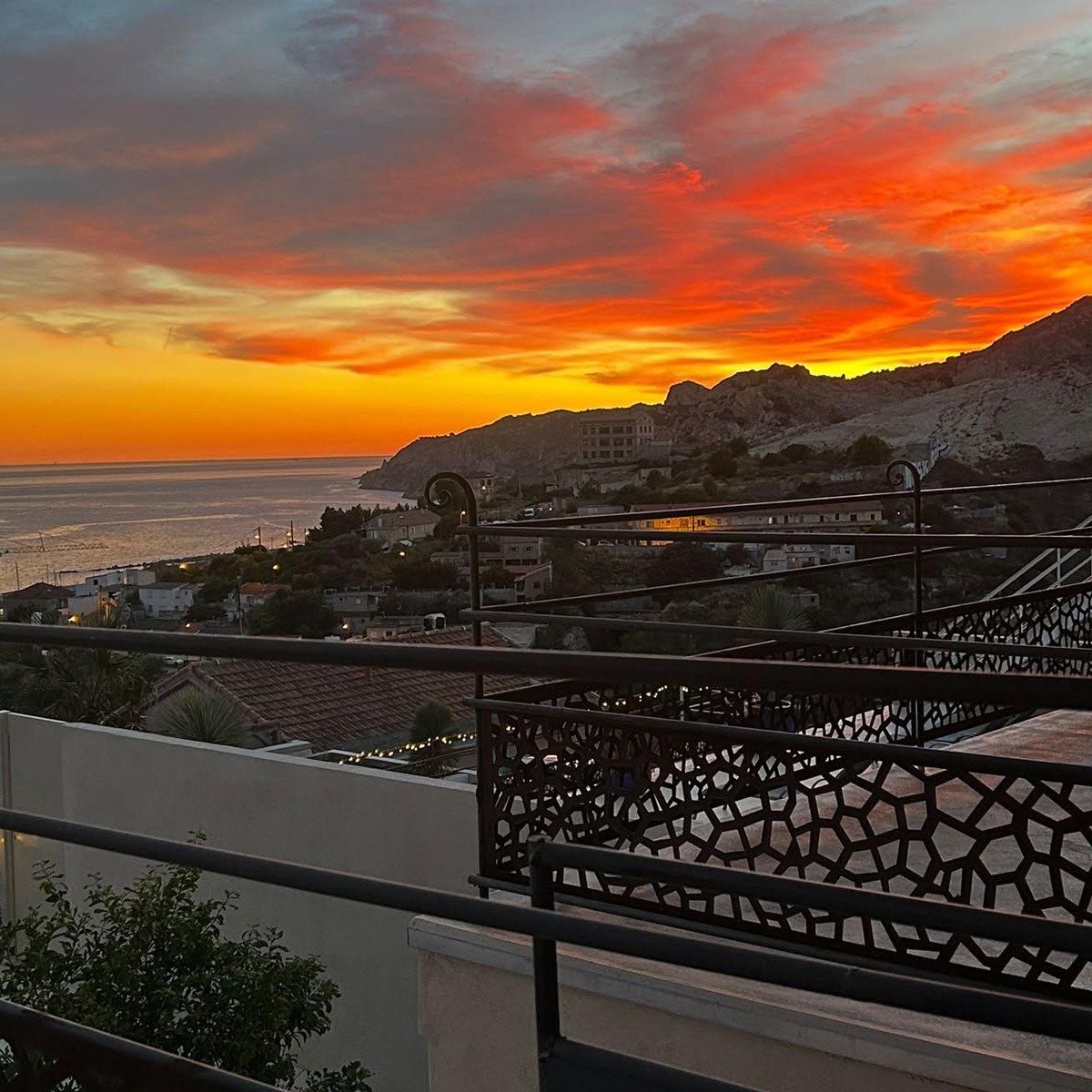
High on the hills of L’Estaque, Villa Byblos looks out over the bay Cézanne painted. The sea view takes in 180°, from Notre-Dame de la Garde past the Frioul islands to the start of the Côte Bleue, and in the evening the sun goes down over the sea. Four bedrooms, room for 8, and the harbour below for a late-afternoon bag of chichis.