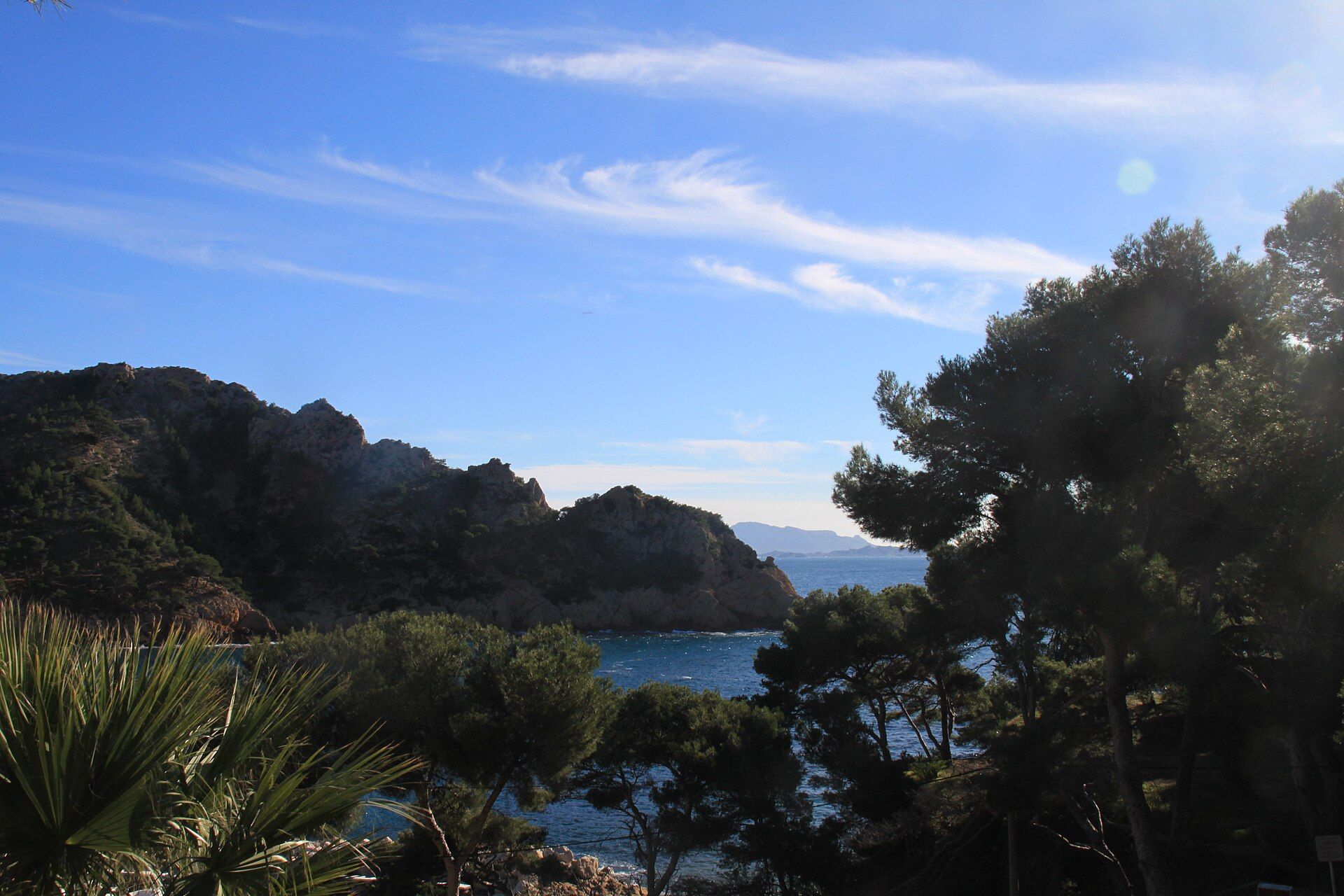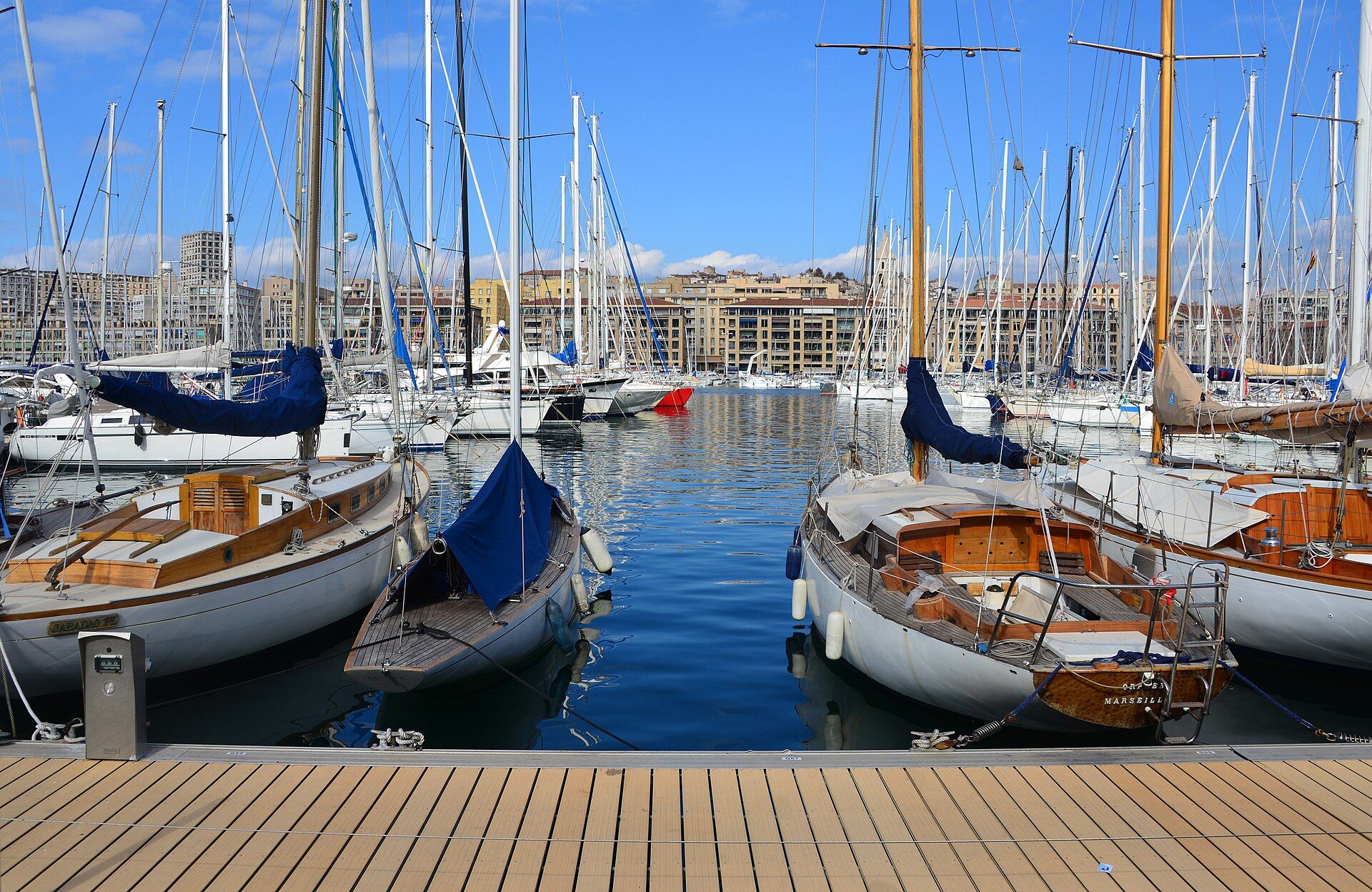
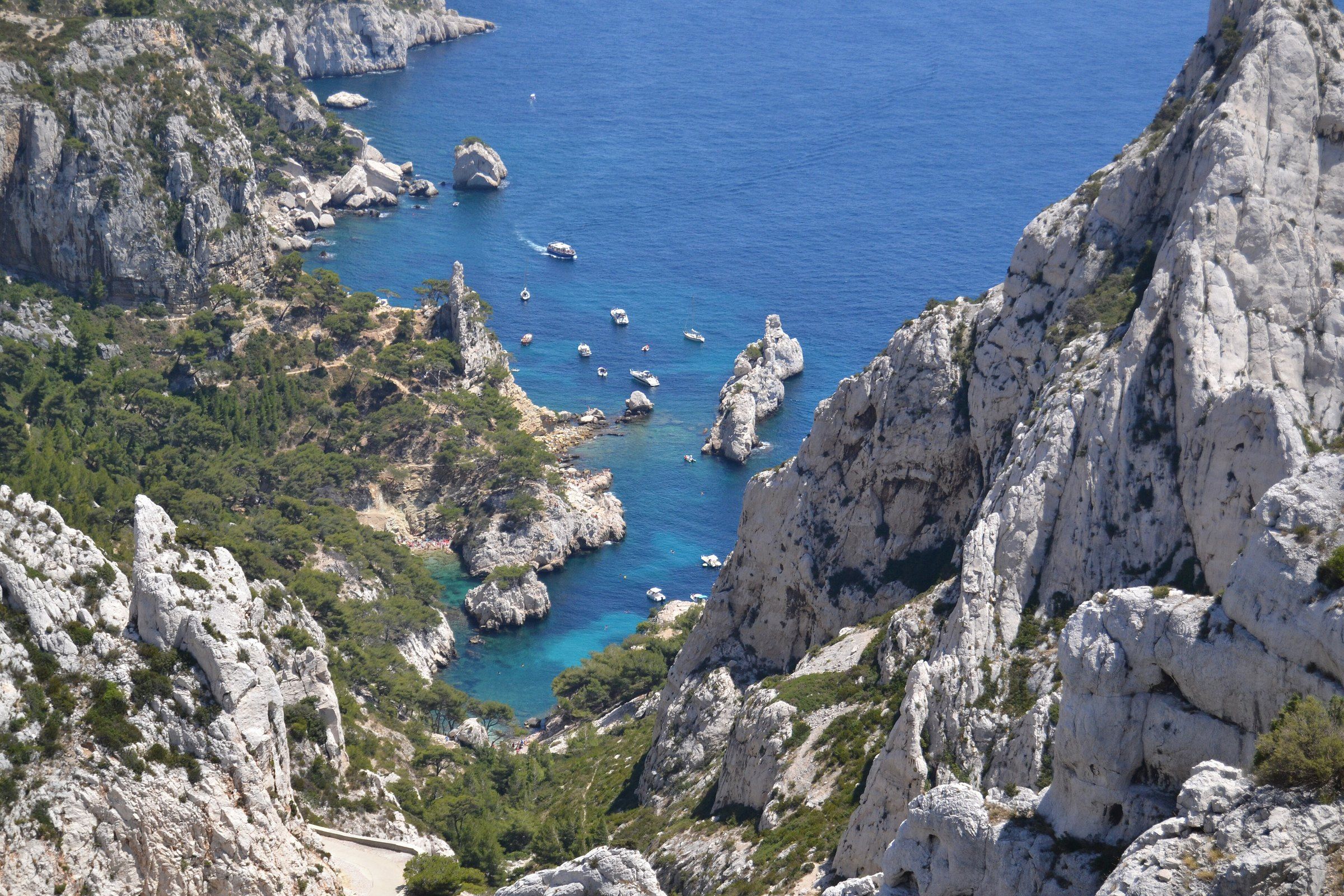
The calanques of the national park run along the coast south of Marseille, from Les Goudes to Cassis. L’Estaque is in the northwest, at the other end of the city, so driving is almost never the easy option. In season, we suggest going by sea: the shuttle boat to the Vieux-Port, then a cruise along the cliffs. If you want to walk, take the bus. And in summer, check two things before you leave: the Sugiton booking and whether the hills are open.
At a glance: which calanque, and how to get there
| Place | Main access | Good to know |
|---|---|---|
| Les Goudes | Bus 19 then 20, or the summer shuttle boat from Pointe-Rouge | A village, with its harbour, cabanons and restaurants |
| Callelongue | Bus 20 to the end of the line | Where the road stops and the trails start |
| Sormiou | Bus 22 or 23, then about 45 min on foot | Lifeguards in summer, road closed to cars in season |
| Morgiou | Bus 22, then about 1 hour on foot | Small fishing harbour and cabanons, road closed in season |
| Sugiton | Bus B1 to Luminy, then about 45 min on foot | Free booking required on some summer days |
| Port-Pin and En-Vau | Train or car to Cassis, then on foot | Steep path down to En-Vau |
| All of them, from the sea | Cruise from the Vieux-Port | You stay on board, no landing in the calanques |
Marseille’s Calanques or the Côte Bleue: two different coasts
When people in Marseille say “the Calanques”, they almost always mean the national park, south and east of the city. But there are calanques to the west too, on the Côte Bleue: Niolon, Méjean, L’Érevine. They start at L’Estaque and are not part of the national park.
From the villa, that is actually the easiest day out, a few minutes away by train. It has its own guide: the Côte Bleue from Marseille. This one is about the calanques to the south.
The Calanques National Park in brief
The Calanques National Park dates from 2012. It is France’s tenth national park and the first peri-urban park in Europe, covering both land and sea. Its core spans three towns, Marseille, Cassis and La Ciotat, and most of its surface is sea.
On land, it is a white limestone massif, dry and in full sun. On the trails and beaches there is no drinking water, no toilets and no bins.
The calanques, from Marseille to Cassis
Les Goudes and Callelongue
Les Goudes is a village inside Marseille, near the end of the coast road. The old fishing harbour is now a marina, surrounded by cabanons and narrow lanes. This is where Jean-Claude Izzo set his detective, Fabio Montale. People come here for lunch by the water more than for a swim: the two small beaches have no lifeguards and are packed in summer.
A little further on, the road ends at Callelongue, the last stop of bus 20. The trails to the big calanques start here, and the calanque of Marseilleveyre is about 45 minutes away on foot.
Sormiou
Sormiou has one of the few large beaches in the Calanques: 60 metres of pebbles and sand. Around it are a small harbour, cabanons that Marseille families hand down from one generation to the next, and the restaurant Le Château. In summer the beach has lifeguards and a first-aid post.
Morgiou
Morgiou still has a small working fishing harbour and its cabanons, below Cap Morgiou and the ruins of a 17th-century fort. Off the cape, 37 metres below the surface, is the entrance to the Cosquer cave, decorated in the Palaeolithic. You can’t visit it, but its replica, Cosquer Méditerranée, is on the Vieux-Port.
Sugiton
You reach Sugiton on foot from the Luminy university campus, at the end of bus line B1: allow about 45 minutes. So many people have walked here that erosion has become serious, which is why booking is now required on some summer days (see below).
For the view without the climb down, the Sugiton viewpoint is enough: a 5 km round trip from Luminy, little climbing, and no booking. The tourist office rates it suitable for an all-terrain pushchair.
Port-Pin and En-Vau
These two are on the Cassis side. The park entrance at Port-Miou is 30 minutes on foot from the centre of Cassis, and Port-Pin is 15 minutes further. En-Vau takes another 30 minutes to an hour, depending on which park page you read, and the path down is steep and tiring in summer.
En-Vau is the most dramatic: a narrow pebble beach at the foot of high white cliffs. Along with Port-Pin, it is also one of the busiest.
Getting there from L’Estaque
By boat: the shuttle, then a cruise
This is our favourite. The RTM shuttle boat links the port of L’Estaque to the Vieux-Port in 35 minutes, for €5 a crossing. In 2026 it ran from 25 April to 27 September, one boat an hour, with the last boats as late as 22:30 from 27 June to 30 August.
At the Vieux-Port the shuttle docks on the Quai de la Fraternité. The Calanques cruise boats leave right next to it, at the corner of the Quai de la Fraternité and the Quai du Port. Two companies share the departures, Croisières Marseille Calanques and Icard Maritime. Depending on the tour, you pass Les Goudes, Callelongue, Sormiou, Morgiou and Sugiton, then carry on to En-Vau, Port-Pin and Port-Miou. A short tour takes about 2 to 3 hours.
One thing to know: you can’t get off anywhere, as there is no drop-off point in the calanques. You stay on board, with a swim stop on some tours. For a private trip, skippered boats leave straight from the port of L’Estaque.
By public transport
First get into town, either by local train from L’Estaque to Saint-Charles (about 10 minutes) or by shuttle boat to the Vieux-Port. From there, it is the RTM network:
- Les Goudes and Callelongue: bus 19 to Madrague de Montredon, then bus 20.
- Sormiou: bus 23 to La Cayolle, or bus 22 to Les Baumettes, then about 45 minutes on foot.
- Morgiou: bus 22 to Les Baumettes, then about 1 hour on foot.
- Sugiton: bus B1 to the Luminy PN des Calanques stop, then about 45 minutes on foot.
- Port-Pin and En-Vau: train from Saint-Charles to Cassis, then bus M01 from the station to the town centre.
In summer, another shuttle boat links Pointe-Rouge to Les Goudes in 15 minutes. In 2026 it ran from 30 May to 30 August.
By car: possible, rarely the easy way
To be straight with you: from L’Estaque you have to cross the whole city from north to south. Allow 45 minutes or more to Luminy or Sormiou, and longer at rush hour.
Once you get there, the park itself advises against driving. Parking is scarce and unattended, and the roads to Sormiou, Morgiou and Callelongue are closed for much of the season. In Cassis, the town recommends the free Gorguettes park-and-ride, where a shuttle bus runs to the park entrance. Out of season, though, a car is still useful.
Summer access rules
The calendar changes every year. The dates below are for 2026: check the national park website for the year of your stay.
Sugiton: booking required
Booking is free and compulsory for Sugiton and Les Pierres Tombées on set days. In 2026: 20 and 21 June, every day from 27 June to 30 August, then 5, 6, 12 and 13 September.
There are 400 places a day. Booking opens 3 days before your visit at 9:00 and closes the day before at 18:00. The window is short, so note the opening time. Each booking covers up to 5 people, and children under 3 do not count. You book on the national park website and show the confirmation email when you arrive.
Road closures to Sormiou, Morgiou and Callelongue
These closures date back to 1959. In 2026 the access roads were closed to motor vehicles from 7:00 to 19:00:
- at weekends and on public holidays in April, then on several long weekends in May;
- from 5 to 7 June, then every day from 12 June to 30 August;
- on Saturdays and Sundays in September, for Sormiou and Morgiou.
There are some exemptions, mainly for businesses on site. Visitors take the bus and walk.
Hills closed on high fire-risk days
From 1 June to 30 September, access to the forest massifs of the Bouches-du-Rhône is decided day by day according to fire risk. The prefecture publishes the map on its website around 18:00 for the next day. When a massif is red, you can’t go in, even on foot, by bike or on horseback.
The simplest way to keep track is the free official app, Mes Calanques. It shows which massifs and roads are open and sends an alert when they close. On red days, a cruise is still an option, since you never set foot on land.
When to go and what to bring
If you want fewer people, the park suggests autumn and winter, and weekdays rather than weekends. In spring and summer, Sormiou, Sugiton, En-Vau and Port-Pin are very busy.
During the day, start early, ahead of the heat and the crowds. And leave yourself time for the way back: in 2026 the last shuttle left the Vieux-Port at 19:30, or 22:30 from 27 June to 30 August.
In your bag:
- water, at least 1.5 litres per person for half a day, more if it is hot;
- proper walking shoes, not flip-flops;
- a hat and sun cream;
- a picnic, and a bag to carry all your rubbish back out;
- for Sugiton in summer, your booking confirmation.
The Calanques with children
With children, a cruise from the Vieux-Port is the simplest: no walking, and the boats take wheelchairs with assistance. On foot, the Sugiton viewpoint has little climbing and works with an all-terrain pushchair. In summer, Sormiou has a beach with lifeguards, after a 45-minute walk.
Skip the path down to En-Vau with young children, though, especially in summer.
FAQ
Do you need to book to visit the Calanques? Only for Sugiton and Les Pierres Tombées, on some summer days: in 2026, from 27 June to 30 August plus a few weekends in June and September. It’s free, and booking opens three days ahead at 9:00. The other calanques are open to everyone, unless the hills are closed for fire risk.
Can you drive to Sormiou or Morgiou in summer? Usually not. In 2026 the roads were closed from 7:00 to 19:00 every day from 12 June to 30 August, and on several weekends in spring and September. Take bus 22 or 23, then walk for 45 minutes to an hour.
How do you get to the Calanques from L’Estaque without a car? In season, take the shuttle boat to the Vieux-Port (35 minutes), then a Calanques cruise. To walk, get into town by train or shuttle boat, then take RTM buses: B1 for Sugiton, 22 or 23 for Sormiou and Morgiou, 19 then 20 for Les Goudes and Callelongue.
Which calanque is best with children? The easiest is a cruise from the Vieux-Port, with no walking at all. On foot, the Sugiton viewpoint is the gentlest outing. Avoid En-Vau with young children.
What if the hills are closed for fire risk? On red days you can’t walk in, but a cruise is still possible. To check, use the Mes Calanques app or the prefecture map, published around 18:00 for the next day.
Are the Côte Bleue calanques part of the national park? No. Niolon, Méjean and L’Érevine are west of Marseille, outside the national park, a few minutes by train from L’Estaque.
Stay at Villa Byblos
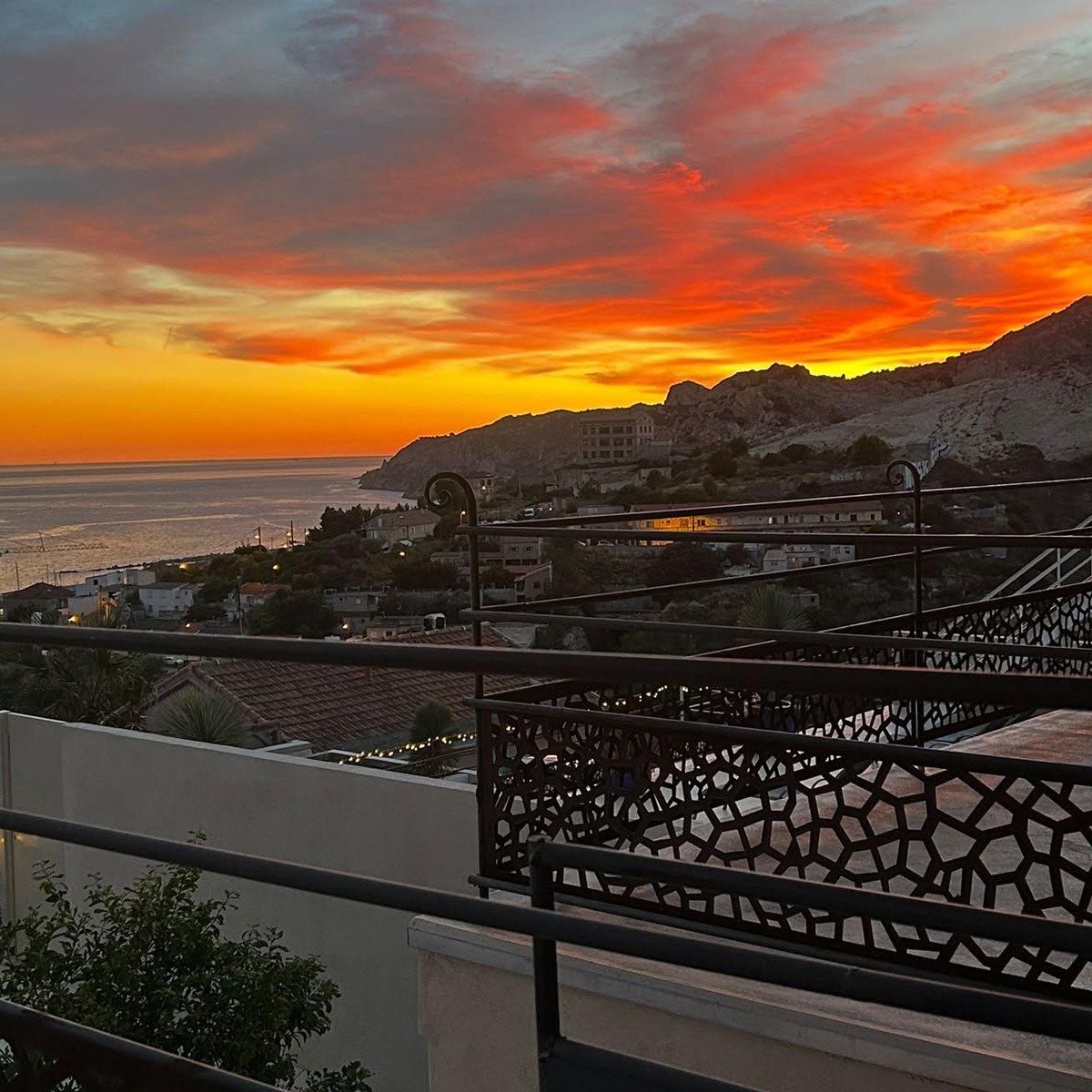
From the terrace of Villa Byblos, on the hills of L’Estaque, you can see the Marseilleveyre massif in the distance, where the Calanques begin. The port of L’Estaque, where the shuttle boat leaves, is just below. The villa has a 180° sea view and four bedrooms, and sleeps up to 8. And on the days you have no booking, the Côte Bleue is a few minutes away by train.
Discover the villa · See rates and availability · Read the Côte Bleue guide